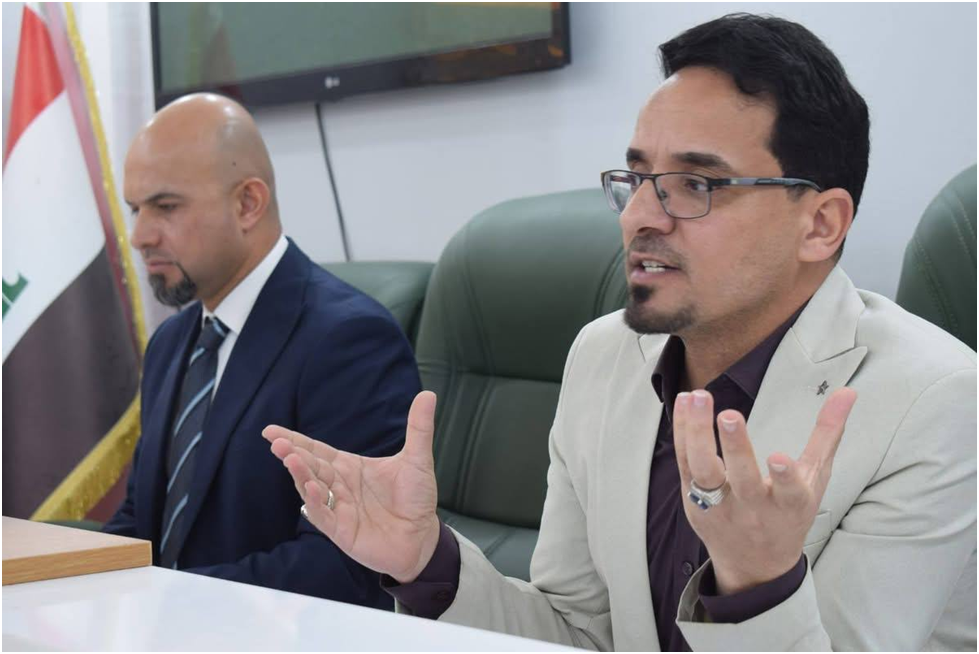
A training course on combating financial and administrative corruption, entitled “Constitutional Mechanisms in Combating Financial and Administrative Corruption,” was held at the Faculty of Administration and Economics at the University of Maysan. It was presented by Dr. Wissam Ali Hussein and A.L. Muhammad Jumaa Abdul Hussein, and lasted for three days in the seminar hall at the college, with the participation of a select group of lecturers and employees of the faculty.
The course aimed to raise awareness of the dangers of administrative and financial corruption to society and development, as well as to review effective ways to combat it. It defined administrative corruption as the abuse of power for personal gain, and explored its various causes, including weak oversight, inadequate legislation, and the prevalence of nepotism. It also detailed its forms, such as bribery, embezzlement, and abuse of power.
The course addressed several topics, most importantly the concept of administrative corruption and its impact on sustainable development, the negative effects of corruption on the economy through the squandering of public funds and the reduction of investments, and on the environment as a result of overlooking environmental violations, in addition to the serious societal impact such as widening the social gap and declining trust in institutions.
The session highlighted the importance of transparency and accountability, the role of deterrent laws and legislation, and community awareness in building a culture that rejects corruption and promotes integrity. It also reviewed Iraqi efforts in combating corruption, such as the activities of the Federal Integrity Commission, the “Where Did You Get This?” platform, the “Model School for Integrity” initiative, and cooperation with the United Nations and international transparency organizations to develop a national strategy.
The session concluded with practical recommendations that included strengthening the independence of regulatory bodies, reviewing and strictly enforcing legislation, involving civil society and the media in uncovering corruption, and integrating integrity concepts into education and vocational training.