كلية الهندسة – جامعة ميسان
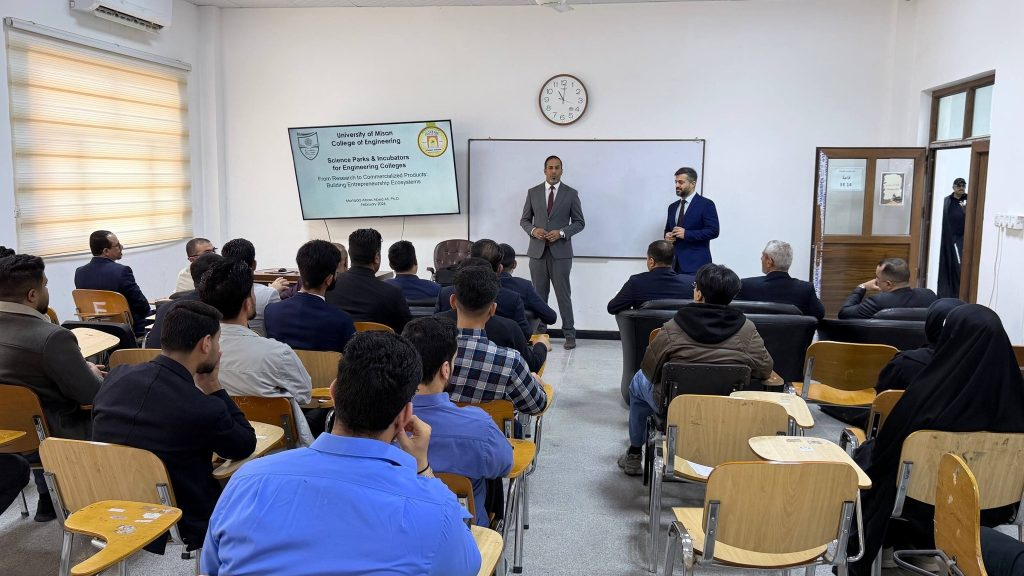
As part of the activities of Leadership Week, the Faculty of Engineering at the University of Maysan held a specialized workshop entitled (From Laboratory to Market: Engineering Plan for Building Innovation Systems), aiming to develop a practical roadmap for transforming academic research and engineering projects into competitive commercial products capable of entering local and global markets, overcoming the barrier known as the Valley Of Death, and ensuring the transition of research ideas into tangible outputs represented by products or emerging companies.
The workshop opened by emphasizing the necessity of activating the role of universities within the knowledge economy, a role that extends beyond education and scientific research to include effective contribution to economic development. Professor Mortada Abbas Abdel-Ali, Head of the Department of Civil Engineering at the Faculty, highlighted that science parks, business incubators, and accelerators constitute strategic tools for overcoming the challenge of Liability of Newness facing startups and for bridging the gap separating laboratory prototypes from commercial success.
The workshop reviewed the CIMO methodology—context, intervention, mechanism, and outcomes—as an integrated framework for designing successful business incubators, alongside the Triple Helix model that connects university, industry, and government to ensure sustainability of innovation ecosystems. A comprehensive 24-month implementation roadmap was also presented, beginning with idea generation and concluding with the graduation of sustainable startup companies.
Within the axis of global and Iraqi success models, participants examined prominent international experiences, most notably the Stanford SPARK model, which achieved an exceptional 62% success rate in commercializing innovations through a network of volunteer experts.
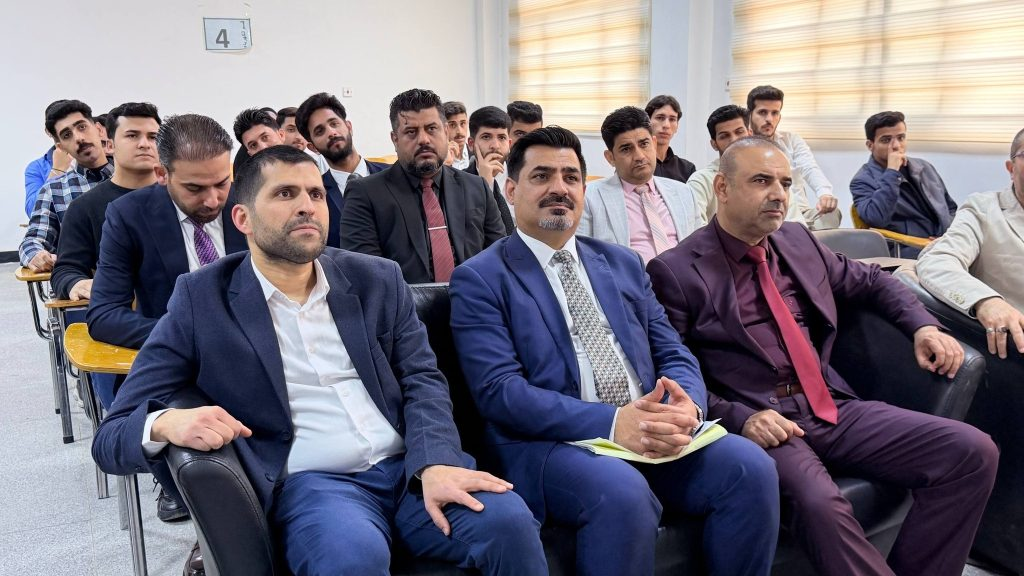
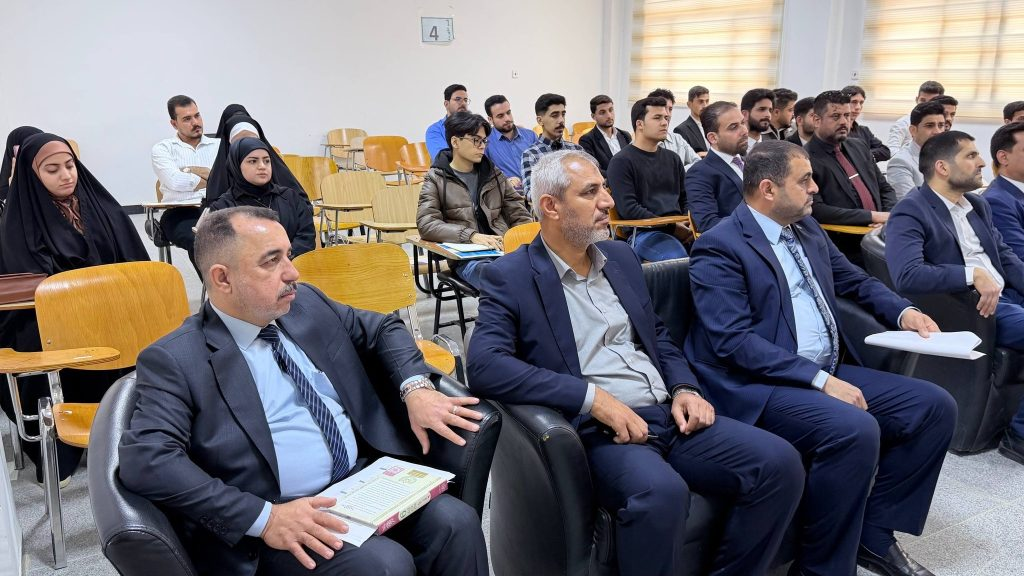
The workshop was attended by the Dean of the Faculty of Engineering, Professor Abbas Oda Dawood, the Assistant Deans, heads of scientific departments, and a distinguished group of faculty members. It also witnessed the presence of the Dean of the Faculty of Agriculture, Professor Dargham Sabih Karim, and Professor Ali Hassan Harfash, Assistant Dean of the Faculty of Agriculture for Administrative and Legal Affairs.
In the local context, discussions addressed the significance of Instruction No. 176 of 2023 issued by the Iraqi Ministry of Higher Education and Scientific Research, which provides the legal framework for establishing Technology Incubators Divisions and protecting the intellectual property rights of students and researchers.
The workshop concluded with a specialized discussion session on available financing mechanisms in Iraq, including the Riyada initiative, which offers soft loans of up to 20 million Iraqi dinars, and the Al-Fursan program dedicated to technical elites. Models for the financial sustainability of incubators—such as equity participation and service-based revenues—were also reviewed to ensure long-term independence from government funding.
==========================
Government Media and Communication Division
Faculty of Engineering – University of Maysan